




What does it mean when an investor says no?

-
 Entrepreneur Lab Female founders in 2026: what the numbers say
-
Entrepreneur Lab New to PE: Lee Carlin, CEO, London Drainage Facilities Part 1 of 3
-
Entrepreneur Lab Scaling Sustainably: What happens after the deal? Part 3 of 3
-
1:16:57
Entrepreneur Lab Why Investors Say No (And Why That’s Not the End of the Story)
-
Entrepreneur Lab Bridging the Awareness Gap
-
Entrepreneur Lab First PE Meetings: Do’s, Don’ts & War Stories






Why a no is rarely about your business, and rarely the end of the story
You’ve sent the deck. You’ve had the meeting. You thought it went well. Then the email arrives: thank you, but it’s not for us.
Most founders who raise investment know that moment, and it rarely comes with much explanation. So, it’s easy to fill the gap with the worst version: the business isn’t good enough, the idea doesn’t stand up, you didn’t impress.
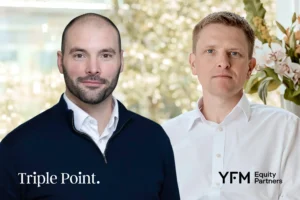
Jamie Roberts, Managing Partner at YFM Equity Partners, says that’s usually the wrong conclusion. He sat down with Aleksandra King on the Beyond the Boardroom podcast to talk about how investors make decisions, what puts them off and why a no today doesn’t mean never. The video has the full conversation.
▶ Watch: Why investors say no (and why that’s not the end of the story)
In short
- YFM sees about 1,500 opportunities a year and invests in around 1%. Jamie says that ratio has held for the 14 years he’s been at the firm.
- Most rejections come down to readiness, fit or commercial terms, not a bad business.
- Investors back people first: YFM doesn’t run businesses; it backs the people leading them, providing the investment and support to help them grow. Not knowing an answer is fine. Deliberately misrepresenting something isn’t.
- Ambition is welcome, as long as the plan is achievable in practice.
Why do investors only back around 1% of the businesses they see?
YFM sees about 1,500 opportunities a year from businesses and entrepreneurs looking for funding and invests in about 1% of them. When Jamie was being trained, his mentors told him the firm would only ever convert one in a hundred. He was sceptical. Fourteen years later, he says, “it’s still 1 in 100 but I still believe we could get it higher.”
That doesn’t mean investors are looking for reasons to say no. A fund manager makes its money by investing, so the incentive runs the other way. “If I could change that 1% to 2%, YFM would be twice as big,” Jamie says. “So, we actively want to do more.”
What keeps the number low is responsibility. “It’s because we’re investing other people’s money,” he explains. YFM raises funds from its own investors and tells them how it will choose and work with companies, so every opportunity goes through the same process.
The part most people don't realise
Investors go into meetings wanting to win the investment, and for management to want to work with them. Jamie says the team approaches every opportunity “with the mindset of, we want to win this opportunity”. Founders choose investors as well as the other way round.
Why does a no rarely mean the business is bad?
A rejection is more often about the investor than the business. Jamie gives three main reasons YFM doesn’t invest: “either because the business isn’t quite ready for the investment, it’s not quite what we do, or we just can’t agree commercial terms.”
One of his colleagues puts it more simply. Most of the time, the job is politely saying, “it’s not you, it’s us”.
A no from one investor also says little about the business’s prospects elsewhere. “One in a hundred work for us, it doesn’t mean the 99 others won’t work for somebody else,” Jamie says. Many of the businesses YFM passes on simply fall outside its two main strategies, growth capital and management buyouts. If you want to check fit before you approach anyone, our guide on how to find the right private equity investor is a good place to start.
Why it matters to you: if the feedback points to timing or fit, the right response may be a different investor or a later conversation, not a different business.
How do investors avoid making snap judgements?
Investors are human, and first impressions are hard to ignore. “We all naturally like people who look, sound and feel like us,” Jamie says. The catch is that people who look and sound like an investor might not be the right people to run a business.
So YFM works on conscious and unconscious bias training and asks its teams not to make up their minds in the first meeting. The process is simply to let founders tell their story and “get to the end of the story before you start making the decision in your head.”
Founders can help here too. With around 65 people at YFM and 1,500 opportunities a year, each person’s time is limited, so sending information before the meeting makes a real difference. Jamie admits it’s a personal bugbear when founders prefer to save everything for the room: “why wouldn’t you send us just a bit more information in advance, so I could do some proper thinking?” For more on the first meeting itself, see First PE meetings: do’s, don’ts and war stories.
People over products: what are investors really backing?
Asked what carries the most weight between the idea, the numbers and the person, Jamie doesn’t hesitate. “It’s always, always, always people.”
He has seen great teams succeed even where the product wasn’t as strong as expected when YFM invested, or the market became difficult. The reverse doesn’t always hold as true: a great product in a great market is hard going if the team can’t execute. “We don’t run businesses; we back people to run their businesses.”
That’s also why YFM looks ahead to the team a business will need. If a company has 20 or 40 people today and plans to be much bigger in five years, Jamie wants to understand how the founders will get from today’s organisation chart to that one, and who they’re bringing through to fill it. Our article on what private equity investors look for in a management team covers this in more depth.
Are you looking for an investor or an operator?
Some investments don’t happen because the business wants more than an investor can give. “Some of the businesses we meet want more from us than we can give them,” Jamie says.
The most common version, especially with younger businesses, is a request to open doors: “can you go and open doors with customers, go get me some sales, please?”
YFM sits on boards and helps with strategic direction, but Jamie says nobody at YFM is going to be right to run your business or provide an executive function. The firm makes introductions where it is helpful, but it isn’t a sales function. It can also bring in non-executives and advisers with relevant experience, for example for businesses expanding into the US, and a full-time member of the team manages that network. The day-to-day running of the business, though, stays with the management team.
Practical advice: before you raise, be clear about what you need. As Jamie puts it: “I can invest the money to recruit a sales director, or a marketing director, but … I can’t be the sales director or marketing director for you.”
What's the one red flag that ends an investment conversation?
Jamie’s answer is “Deliberately misrepresenting.”
Not knowing something is a different matter. Founders are running sales, marketing, tech and HR all at once, and nobody expects them to be accountants. “We don’t consider not knowing something a red flag,” Jamie says. If a founder can’t answer a question, the team asks them to come back with it and can help them find it.
The ick comes when something a founder said turns out not to be true. His example is a business that says it has 50 customers, but it turns out to have 15.
He compares investing to getting married. “However we all behave now is a really good example as to how we’re going to behave.”
Ambition versus blind optimism: where's the line?
Founders need self-belief, Jamie says. “Building a business is hard, and founders need the confidence to keep going when others doubt them.”
What he struggles with is the founder who claims to have built the next Google. What he loves is something grounded: “this is what I’ve got, this is what I’ve done, this is how I’ve done it, this is why it’s going to be awesome over the next 5 years but there are lots of unknowns.”
The same goes for plans. “We get nervous about blind optimism, hope isn’t really a plan,” he says, but “we really like the test and learn philosophy.” A UK business opening a small US office with three people to see what works is ambition. Asking for investment to hire 300 people across the US within a year makes him nervous: “it doesn’t mean they can’t do it, it’s just executionally tough and that brings a lot of risk.”
He often plays a plan back to founders. Adding 20 staff in a year means recruiting two people a month. If you need to meet five candidates to hire two, that’s ten interviews a month, every month. Who is going to spend all month finding those candidates and doing interviews and prep?
What do the founders investors lean in to have in common?
Jamie describes the shared trait as “a burning desire”: founders who light up when they tell their story. He’d rather see that than a perfectly polished pitch. When a founder apologises for drifting off the point, his response is that he wants them to: “I want you to go on a random walk with us as it often lets us see the real you and understand your motivations much better.”
He also asks early on what success looks like and why founders are doing it. Very few say money. He likes hearing about the business they want to build and their life outside work, because people with things going on outside work are, in his experience, “significantly more stable”.
And a big tick is founders who seek help from mentors, coaches and advisers. “I love people who go looking for the help and believe they don’t know everything.”
One last thing
A no from an investor can be one of the most useful things you hear. Jamie points out that founders get plenty of feedback that doesn’t help. Friends and family tell you it’s brilliant “because they don’t want to hurt you”, and other people knock you down. An investor explaining why they’re passing sits somewhere more useful in between.
So when the answer is no, ask why. Find out whether it’s timing, fit or something you can fix, and decide what to do with it.
A no is information. What you do next is the rest of the story.
If you’d like to talk about where your business is and whether the timing is right, meet the YFM team or get in touch. And if you’re still at the “should I even explore private equity?” stage, start with Bridging the Awareness Gap.