





M&A, plain and simple:

-
 Entrepreneur Lab Private Equity for Founders: Advice from LDF CEO Lee Carlin Part 3 of 3
 -
Entrepreneur Lab Buy & Build: What We Actually Look For
-
Entrepreneur Lab Getting M&A ready Part 2 of 3
-
Entrepreneur Lab What founders are really asking about M&A and Exit Readiness
-
Entrepreneur Lab New to PE: Lee Carlin, CEO, London Drainage Facilities Part 1 of 3
-
Entrepreneur Lab Scaling Sustainably: What happens after the deal? Part 3 of 3


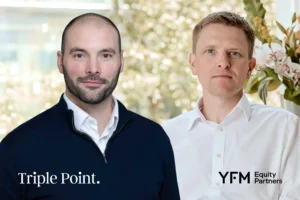



The private equity perspective
If you’ve been running a business for a while, you’ll have noticed that the language around M&A can feel like it was designed to keep people out. Heads of terms, earn-outs, completion accounts, enterprise value, the jargon stacks up quickly, and before long a conversation that should be about your business and your future starts to feel like a legal document.
Over the coming weeks, we’re bringing together founders who’ve been through acquisitions, investors who’ve backed them, and advisers who’ve sat at the table, to talk plainly about what M&A looks like for growing businesses in the lower mid-market. Not the theory – the reality.
But first, some basics. Because if you’re earlier in your thinking, it helps to start from the ground up.
What does M&A mean for a growing business?
For ambitious founders, it tends to come up in one of three ways: you’re considering acquiring another business to accelerate your growth; you’re thinking about what an exit might eventually look like; or someone has approached you and you’re trying to work out what to do next.
All three are valid, and all three are more common than founders sometimes realise. In the lower mid-market, broadly, businesses turning over between £2m and £20m – acquisitions happen every day. Many of them don’t make the trade press. They’re just well-run businesses making smart decisions about how to grow faster, or owners reaching the point where the right next chapter involves someone else.
What is buy & build - and why does it matter?
Buy & build is a specific growth strategy where a business, the platform, makes a series of acquisitions to build scale, expand into new markets, or bring in capabilities it would take years to develop organically. Done well, it’s one of the most effective ways to create significant value for shareholders in a relatively short timeframe.
It’s also harder than it looks. The businesses that do it well tend to share a few things: a clear platform with genuine competitive strength, a management team that can run the day job and integrate acquisitions simultaneously, and a realistic view of what they’re buying and why. The businesses that struggle usually have at least one of those things missing.
Where does private equity fit in?
PE investors, like YFM, back ambitious management teams with capital, experience, and network. In the context of buy & build, that means funding the acquisitions, but also bringing the deal experience that most management teams simply haven’t had the chance to accumulate yet. We’ve sat at a lot of tables. We’ve seen what works in due diligence, what kills deals at the approach stage, and what determines whether an integration succeeds or quietly unravels six months in.
That experience is genuinely useful, not as a set of instructions, but as a sounding board. The best buy & build partnerships we’ve been part of are ones where the founder brings the commercial instinct and the market knowledge, and the investor brings pattern recognition and the capacity to move quickly when the right opportunity appears.
What's coming in this series
Over the next few weeks, we’ll be publishing perspectives from founders, investors and specialists who’ve been through this process. No jargon. No theory. Just honest insight from people who’ve done it.
Don’t miss it – follow YFM on LinkedIn
View our Portfolio of companies to gain insight in how YFM can help grow your business.
If you think we could help with your next stage of growth, get in touch.





What are founders really asking when they start thinking about acquisitions and exit…