





Back
Part 2 of 3
Funding to Grow
-
 Entrepreneur Lab Private Equity for Founders: Advice from LDF CEO Lee Carlin Part 3 of 3
 -
Entrepreneur Lab Buy & Build: What We Actually Look For
-
Entrepreneur Lab Getting M&A ready Part 2 of 3
-
Entrepreneur Lab What founders are really asking about M&A and Exit Readiness
-
Entrepreneur Lab New to PE: Lee Carlin, CEO, London Drainage Facilities Part 1 of 3
-
Entrepreneur Lab M&A, plain and simple:



Scaling a business always demands capital…
…but choosing how to fund that growth can be just as critical as the strategy itself. And that’s where founders often hit the same questions: Should we raise debt? Should we bring in equity? How do we balance the two? And how do we know which approach fits the moment we’re in?
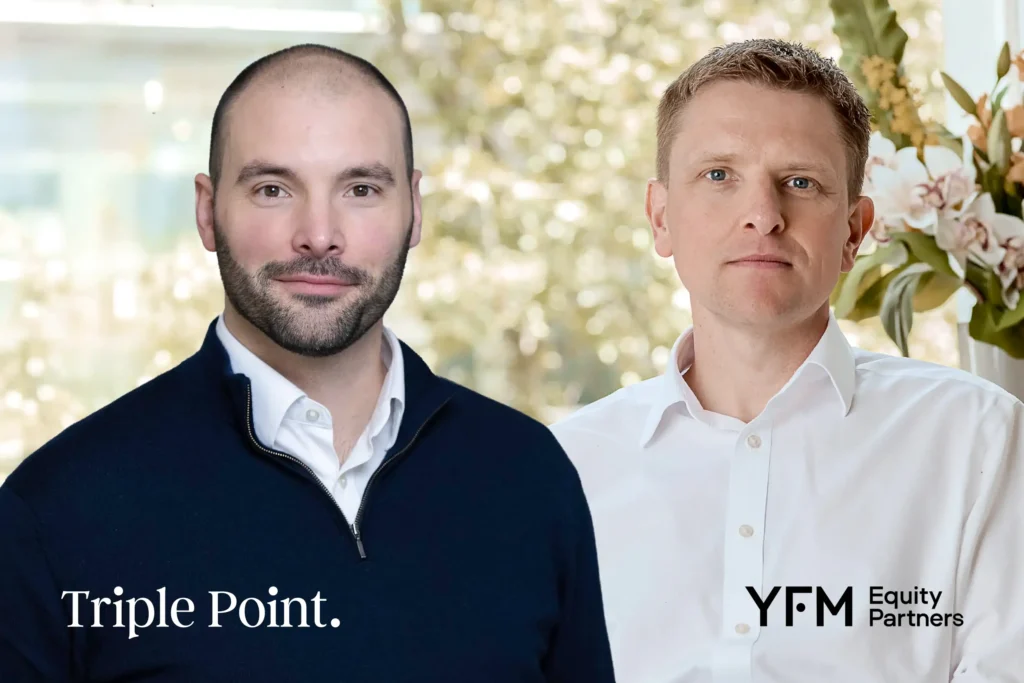
To help answer those questions, YFM and Triple Point are continuing our joint series, bringing together two perspectives from opposite sides of the capital structure: the equity view from YFM’s Jamie Roberts, and the debt view from Triple Point’s Dominic Reason.
This second article explores how founders can navigate the funding decision, when debt or equity makes the most sense, and why the most successful growth journeys increasingly blend the two.
Triple Point: Debt Finance and Discipline
Debt can be a powerful accelerant when it supports the strategy rather than dictates it. Used with discipline, it provides fuel for growth while supporting existing ownership structures. We see debt working best when five principles guide the approach: strategic clarity, cashflow confidence, flexible structuring, vendor alignment, and ongoing governance.
For established businesses with proven performance, acquisition opportunities, or strong recurring revenues, debt can accelerate growth by enhancing capital efficiency and amplifying returns.
It also introduces financial discipline. The rhythm of repayment, covenants, and reporting helps sharpen focus on margin resilience and ultimately cash conversion.
At the same time, debt can be flexibly structured, combining senior, mezzanine, and vendor elements to support working capital or M&A, while retaining headroom for further investment.
We believe debt works best when the business can see a clear path to servicing their debt obligations through predictable and historic cash generation, and not in a way that puts undue stress on the business through over-leverage.
YFM: Equity Investment and Partnership
Equity plays a different role in a growth journey, it gives businesses the space, resilience, and headroom to take bigger steps than short-term cashflow alone can support.
From our perspective, equity works best when a business is at a crossroads: launching new products, entering new markets, strengthening leadership, or building a platform that can scale. These moments often need more than financial efficiency, they need time, support, and partnership.
For us, that partnership is a big part of the equation. We back management teams first, not just business models. Equity creates room to hire, build capability, and put the right rhythm and structure in place so future growth is more predictable, and often more “bankable” when debt comes into the mix later.
It also creates alignment. Everyone, founders, leadership, investors, is sharing in the same long-term outcome. That shared ownership helps keep focus on building durable enterprise value rather than chasing short-term metrics.
In short, equity helps businesses make the kind of strategic moves that reshape a company’s trajectory, the ones that need patience, not pressure.
The Power of Blended Finance
In reality, most successful growth journeys blend both approaches. Debt and equity can complement each other, equity provides the foundation, absorbing risk and funding innovation, while debt enhances capital efficiency once performance is proven.
For acquisitive businesses, that means using equity to de-risk the platform by proofing concept, then layering in debt as earnings mature.
For expanding SMEs, it might mean combining an equity stake with a structured debt facility, maintaining founder control while accessing institutional capital.
Conclusion
The funding decision should always flow from the strategy. What are you trying to achieve? Accelerate growth, consolidate, or create liquidity for shareholders?
Debt and equity are tools, not outcomes. Leverage debt suits businesses with predictable cashflows, a clear path to repayment, and a desire to preserve ownership. Equity fits best where there’s uncertainty, scale-up risk, or a step-change in growth potential that needs patient capital.
Ultimately, the question isn’t debt versus equity, it’s about alignment. When founders, funders, and management teams are pulling in the same direction, the capital structure becomes a lever for value creation rather than a constraint on ambition.
Whether through performance-based earn-outs, covenant-light debt, or growth-linked equity, the objective remains the same: to fund sustainable growth that compounds over time.




Part 1 of 4
Acquisitions can accelerate growth, but only when they’re intentional and well-structured. In this…

Many founders still don’t realise how private equity can support growth. This blog…
14:21

Automate Pro CEO Paul Chorley shares the lessons behind scaling a tech business,…

Mentorship is the hidden driver of business growth. Gavin Chadwick, Investment Director at…

Jess Denny, Head of Comms and Marketing at Xapien, shares how strategic communications…

Laura Keir, CEO for Protein Works shares how they have successfully implemented high…
04:55

In this article, Vypr COO Tasmin Sibbald shares why customer retention is one…
02:45

In this video and article, Summize CEO Tom Dunlop shares hard-won lessons on…

Drawing on insights from over 60 UK growth companies, YFM outlines 10 strategic…

Learn from examples and insights from some of the leading brands and understand…
14:12
WorkBuzz Founder & CEO Steve Frost shares expert insights on how fast-growing businesses…